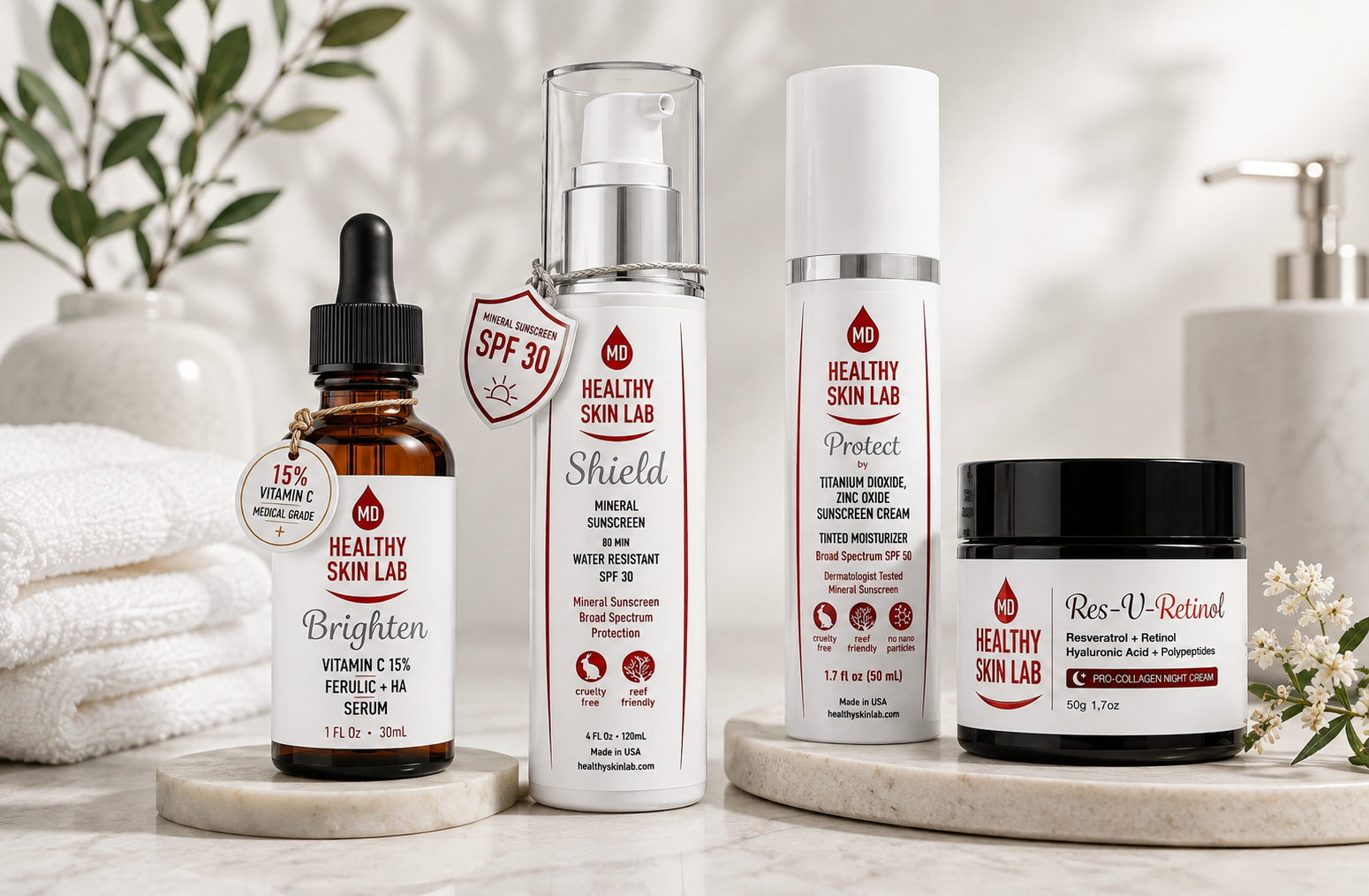
Medical-grade skincare is not a formal FDA category. The more useful question is whether a formula uses evidence-informed active ingredients at appropriate concentrations, in a stable formulation, and in a way that makes sense for your individual skin.
Walk through any department store and you will see shelves filled with beautifully packaged creams and serums promising brighter, younger and healthier-looking skin. Then visit a dermatologist or medical clinic and you may encounter another term: medical-grade skincare.
So, is there really a difference?
The answer is yes—but perhaps not for the reason you might think.
What Does “Medical-Grade Skincare” Mean?
“Medical-grade skincare” is a commonly used industry term rather than a separate FDA regulatory category. In practice, the phrase is often used for professional skincare formulas that emphasize active ingredients, formulation quality, stability, delivery systems, and targeted skin concerns.
Your Skin Is an Organ, Not a Surface
First, “medical grade” is not a magic regulatory classification. In the United States, for example, the FDA does not formally recognise “medical grade” or “cosmeceutical” as a separate category of skincare. A product may legally be a cosmetic, a drug, or sometimes both, depending on what it is intended to do and the claims being made about it.
For me, the more useful distinction is between skincare designed primarily to look and feel good, and skincare formulated around what ingredients can actually do for the biology of your skin.
Skin isn't simply wrapping paper for the human body. It is a living, constantly changing organ with its own immune system, microbiome, pigment-producing cells, blood vessels, collagen architecture and mechanisms for repairing damage.
If we want to change how skin behaves, therefore, the ingredient matters—but so do its concentration, stability, formulation and ability to reach the place where it needs to work.
Professional or so-called medical-grade products often place greater emphasis on active ingredients and delivery systems. Dermatologists interviewed by Byrdie, for example, point to higher concentrations of actives, ingredient stability and more sophisticated mechanisms of absorption as potential advantages of professional formulations.
| What to Evaluate | Why It Matters |
|---|---|
| Active ingredient | Identifies what the formula is designed to do for the skin. |
| Concentration | More is not automatically better; the useful level depends on the ingredient and the person using it. |
| Stability | An active ingredient needs to remain effective within the formulation and packaging. |
| Delivery system | The overall formulation influences how an ingredient interacts with the skin. |
| Skin compatibility | Sensitive, pigmented, ageing, and acne-prone skin may require different approaches. |
More Isn't Always Better
Think of it like cooking. Having blueberries in a cake doesn't necessarily make it a health food. Similarly, putting a fashionable ingredient on a skincare label tells you surprisingly little about how much is present, whether it remains stable inside the bottle, or whether the formulation allows it to interact meaningfully with your skin.
A higher concentration does not automatically mean a better product.
Retinoids, acids and other biologically active ingredients can irritate skin when used incorrectly. More powerful skincare needs to be matched to the person using it. Sensitive skin, pigmentation, ageing skin and acne-prone skin are not interchangeable problems—and neither should their skincare routines be.
Science Before Marketing
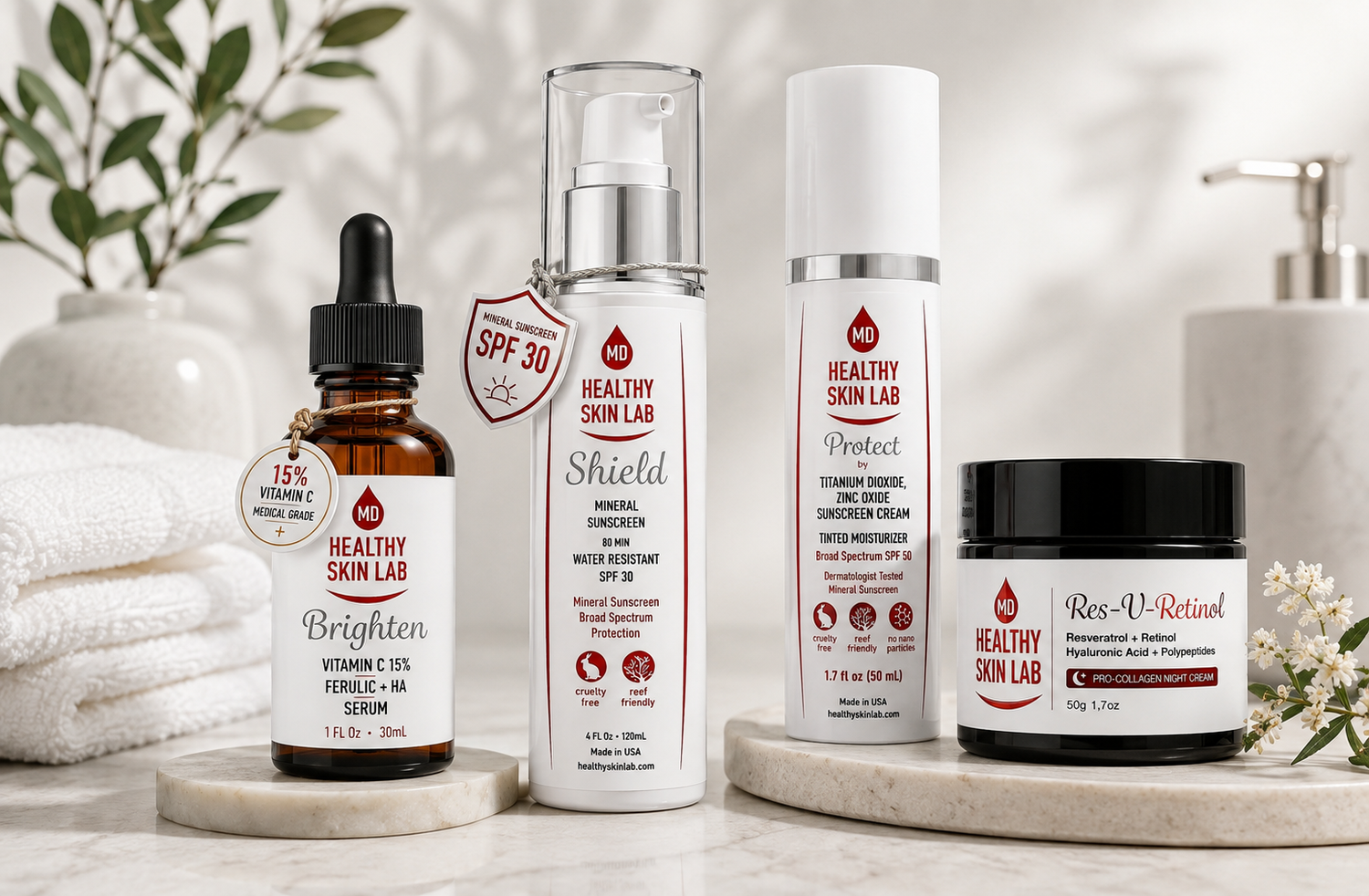
That is why at Healthy Skin Lab, our philosophy is not about filling your bathroom cabinet with more products. It is about understanding skin biology and choosing ingredients with a purpose.
The skincare industry loves new ingredients, complicated names and beautiful packaging. But your skin cannot read the label—and it certainly doesn't know how much you paid for the bottle.
What your skin responds to is chemistry and biology.
So rather than asking whether a product is “medical grade” or “cosmetic grade,” I suggest asking better questions:
What is the active ingredient? Is there science behind it? Is it present in a useful formulation? Is it stable? And, most importantly, is it right for my skin?
Because good skincare shouldn't begin with marketing.
It should begin with skin.
Frequently Asked Questions About Medical-Grade Skincare
Is “Medical-Grade Skincare” an FDA-Regulated Category?
No. “Medical grade” and “cosmeceutical” are commonly used skincare terms, but they are not separate FDA regulatory categories. Products may be regulated as cosmetics, drugs, or both depending on their intended use and claims.
Is Medical-Grade Skincare Always Better Than Regular Skincare?
Not automatically. A more useful comparison looks at the active ingredients, concentration, formulation, stability, delivery system, and whether the product is appropriate for your skin.
Does a Higher Concentration Mean a Skincare Product Works Better?
No. Higher concentrations are not automatically better and may increase irritation, especially with biologically active ingredients such as retinoids and acids.
What Should I Look for When Choosing Skincare?
Look at the active ingredient, the evidence behind it, the formulation and stability of the product, and whether it is appropriate for your individual skin and concerns.
Why Does Formulation Matter in Skincare?
The presence of an ingredient on a label does not tell you everything. Concentration, stability, the surrounding formula, and the way the ingredient reaches and interacts with the skin all matter.
Sources: Aesthetic Therapies, “Medical Grade vs. Cosmetic Skin Care Products”; Byrdie, “Medical-Grade Skincare.”